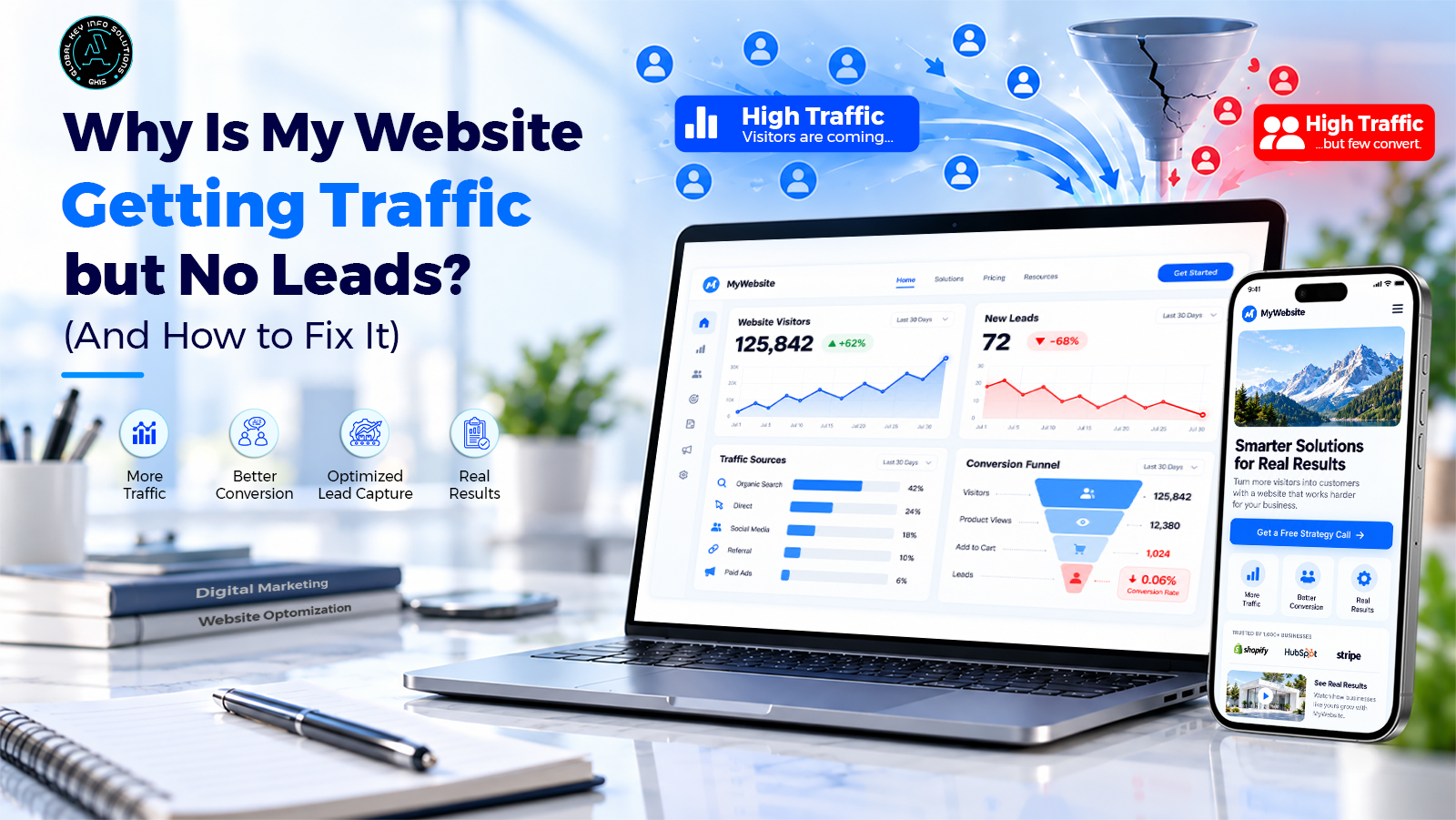
| Quick answer If you have traffic to your site but no leads, it's because you are either attracting the wrong people or not converting the right ones. Fixing this problem means looking at who you are attracting and tightening that so you can then eliminate any obstacles between a visitor and an inquiry. Obstacles could include slow loading times on mobile, lack of trust signals, or not having clear next steps to lead visitors towards making an inquiry. |
As a business owner, there’s nothing more infuriating than having a website that generates traffic but generates no leads. You check your analytics, and there’s traffic. But your phone stays silent, and your contact form remains empty. This problem is relatively inexpensive to fix. The reason your website generates traffic but doesn’t generate leads is usually due to just a handful of issues, and they’re almost always issues on the page itself. So, why isn’t your website converting, how can you figure out where your leads are dropping off, and what can you do to fix it? This article will go over all of that and more.
The Hard Truth: Most Websites Convert Badly
Start with some perspective. Contentsquare's Digital Experience Benchmark Report (2026) found that, on average, websites only convert 2.35% of their visitors to any action. It analyzed 46 billion website sessions. So if 1000 people visit your website and fewer than 30 people enquire, your website is not broken. It is just average.
Average conversions leave most of the money on the table. Top performers convert several times higher than the average. The gap between average and good is exactly where your missing leads are hiding. The goal, then, is not to chase more traffic. It is to convert more of the traffic you already pay for.
First, Split the Problem in Two
What you need to fix will depend on which part of the funnel is failing. Let's say you have website traffic, but you aren't generating any leads. You could have a traffic quality issue or a conversion issue. A traffic problem means you are pulling in the wrong people, visitors who were never going to buy from you. A conversion problem means the right people arrive but leave without acting.
Most sites have a mix of both problems. A quick way to check is to see if visitors stay on your site and look at multiple pages or if they quickly leave after only looking at one. Do visitors ever make it to your contact or about page? We will cover how to diagnose these problems in more detail later, but try to keep this in mind while reviewing the possible reasons.
Why Your Website Gets Traffic but No Leads
1. You Are Attracting the Wrong Traffic
Not all website traffic is good traffic. Many site visitors arrive on your page via keywords related to products and services you don’t provide. They arrive via links from posts that go viral, but have no intent to buy. Often, high numbers of site visitors do not translate to leads, because the visitors are from the wrong audience. Lead generation, the first step in the buyer’s journey, happens when the right audience arrives on your website via pay-per-click ads and through search engine optimization (SEO) efforts, and that’s where professional help is worth the investment.
2. There Is No Clear Call to Action
Visitors do not have to guess what to do next or hunt for the next step. Most website visitors will not explore your site to figure out the next step. If a page doesn’t explicitly tell them to call, get a quote, book a demo, or something else, they will leave. Many sites offer too many options, and visitors are afraid to pick the wrong one. Too many choices result in analysis paralysis. For each important page, decide on the single action you want a visitor to take, and add a large, clear button that is aligned to the page’s message.
3. Your Enquiry Path Is Too Hard
Even a motivated customer gives up when reaching out feels like a task. Long, complicated contact forms, unnecessary fields, a lack of phone or WhatsApp options, and an absence of click-to-call buttons all contribute to friction. Every lead is lost because of unnecessary extra steps. In India especially, a click-to-call and a WhatsApp button are easier and more convenient ways for customers to reach out as compared to a contact form. Don't make reaching out a chore. Rather, simplify the process to a single step.
4. Your Site Is Too Slow, Especially on Mobile
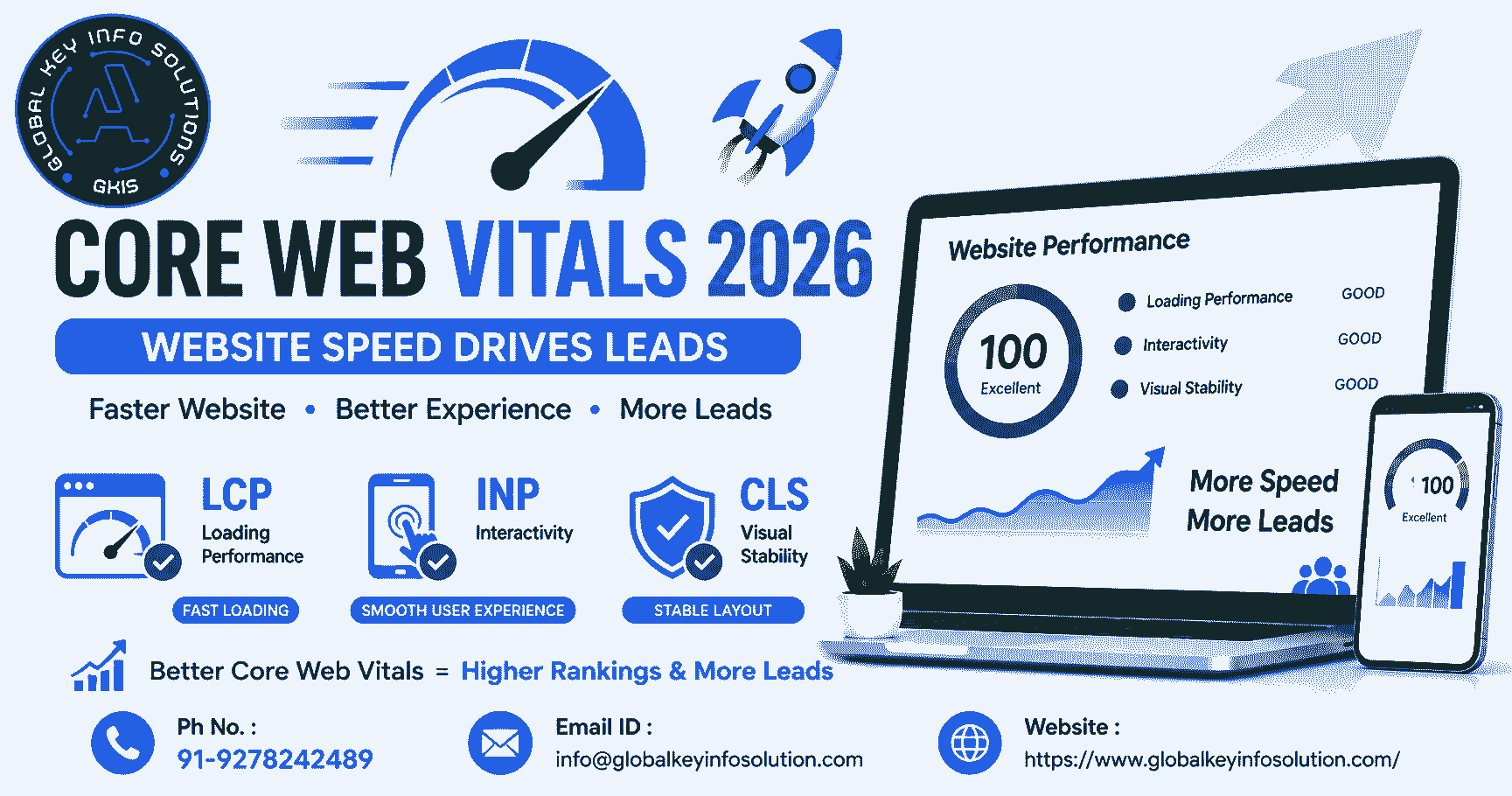
Speed is conversion, not a technical detail. In India, 75% of all web traffic is from mobile devices, especially mid-range 4G phones. Visitors will leave before they see your offer if your page takes too long to load. According to Google’s research, the longer a page takes to load, the more likely it is that a visitor will leave that page. If your page loads slowly on mobile devices, then you are wasting money to acquire potential customers and losing leads. This is why a fast and mobile-first design is extremely important.
Read More: How a Slow Website Quietly Loses You Leads
5. There Are No Trust Signals
People generally don't give their information to businesses that they don't trust. A website that has no customer reviews, no actual address or phone number, no case studies, and has an outdated design is basically telling people to be cautious. Trust signals, on the other hand, tell people that it is OK to take action. Some trust signals include real customer reviews, a clear contact and location, well-known client names, and secure payment or SSL certificates. On the web, trust is not optional. It is a direct conversion tool.
6. The Page Does Not Match What They Searched For
Users will bounce if they reach a general homepage instead of the specific page relevant to their search term or ad. General pages will not satisfy the user’s search intent, which is why having a specific landing page aligned with the search term or ad will outperform a general page. A general page will not meet the user’s search intent as effectively. Data from 2026 claims that a dedicated landing page will have a conversion rate of 6-7%, while a general page will be around 2-3%. If a user has a specific intent, make sure to provide a specific landing page to increase your conversion rate.
7. You Respond Too Slowly to the Leads You Do Get
Sometimes the leads are arriving, but they die from slow follow-up. This one should sting: leads contacted within five minutes are around 21 times more likely to qualify than those contacted after 30 minutes, according to the InsideSales and MIT Lead Response Management study. Yet most businesses take hours, even days, to reply. A fast, automated acknowledgement- a WhatsApp or email auto-reply, for example- keeps a lead warm until you're able to properly follow up. This prevents valuable leads from going cold.
How to Find Exactly Where You Are Losing Leads
Diagnose before you treat, because guessing wastes money. Most of what you need to know can be found with a few free checks:
Google Analytics (GA4): See which pages people land on, how long they stay on each page, and which page they leave before reaching your contact page.
Google Search Console: Get the exact terms people used to find you. If these terms do not align with what you sell, you have a traffic quality problem, not a page problem.
Test your site on a phone: Time how long it takes to load, and then try to submit exactly the kind of query a customer would submit. Any friction you feel, a stranger feels far more.
Heatmaps (Many offer a free service): See where users click, how far they scroll, and where they lose interest and leave.
With these 4 checks, you can tell if your issue is with who comes to your site or if it's with what happens when they get there. You can prioritize your work based on what you find.
Turn Your Traffic Into Real Enquiries
Get a free review of why your website is not converting, with a clear plan to fix it.
Get My Free Conversion Review →The Fix-First Checklist
Here are a few things to do (in this general order). Most are quick, free, and can be done in under a week.
- Add one clear call to action to each of your key pages.
- Add a click-to-call button to your mobile version and add a visible WhatsApp button.
- Reduce your contact form to only essential fields.
- Improve your mobile site to work better over 4G.
- Add reviews and contact details to your site.
- Update your main site pages to include what people are searching for.
- Add an instant reply to your leads, so no lead is left uncontacted.
These improvements will help increase lead generation from your current site traffic without additional ad spend.
Conclusion
A site with visitors but no leads is more of an opportunity than a lost cause. You’re already paying for visitors, so the goal is not to lose them anymore by making the site attractive to the right audience, eliminating all friction points, and making it easy to get in touch. The easiest way to do this is to start with the checklist and focus on the cheap and quick-win changes first. Then measure to see what actually moves the needle.
To get help optimizing your website from an outside consultant, Global Key Info Solutions works with Indian businesses to enhance their existing website traffic by generating more qualified leads.

6abc94e89e42f.png)


0 Comments
Leave a comment