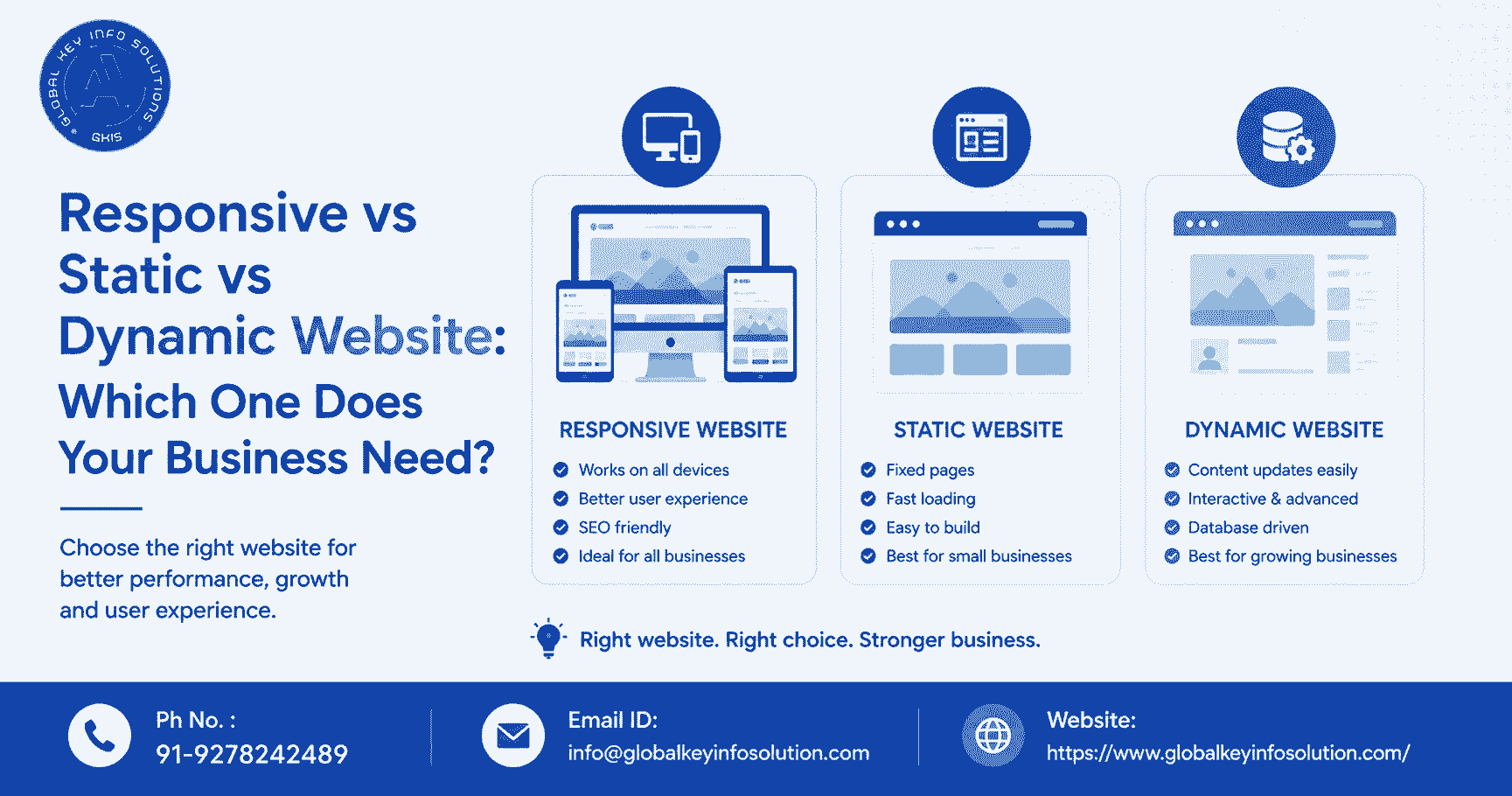
If you've ever asked an expert in web design whether you require an interactive static, dynamic, or responsive website, you've probably left with a lot more confusion than you did before. The majority of guides consider these to be three options from one menu, and you are forced to choose one. The truth is that almost no one can explain in detail.
There are two different sorts of things. Two of them detail the way your website functions behind the scenes. The third one describes what happens when you use the phone. Once you know that, your decision is easy. In this guide, we break down every one in simple language and show you what they mean for India in 2026 and assist you in deciding what your business needs.
First, Clear Up the Biggest Misconception
Before we do anything, we should fix the error that afflicts many business owners. Dynamic, static, and responsive don't need to be included in the same group. The combination of them is similar to asking if you'd like a petrol car or a diesel car or air cooling. Two of them are engine types. One of them is a feature that you're looking for in any engine. Combining them is the most frequent reason why entrepreneurs overpay for their services or get the wrong site.
Static vs Dynamic is About the Backend
Dynamic and static describe the way the pages on your website are constructed and then served. A static site serves pre-made pages that appear the same for each visitor. Dynamic websites build pages in real-time, typically by pulling data from a database. This means that the content may change depending on the type of user or what they're doing. This is a backend choice. It can affect your loading speed, costs, and the ease with which you are able to update your content.
Responsive is About the Screen, Not the Server
Responsive design is a different thing completely. It determines how your site adapts to the user's screen size when they visit it on a mobile device, tablet, or desktop. A professional responsive website makes use of flexible layouts and grids that can be stretched or resized to be able to fit on any display. It doesn't have anything to do with the fact that your backend is either static or dynamic. It is possible to create a static website that is fully responsive as well as a dynamic website that is completely responsive.
So the Real Question is Two Questions
Once you see this, the choice gets easier. You are actually answering two separate questions. First, does your business need a static or a dynamic backend? Second, is your site responsive? The answer to the second is always yes. In 2026, a site that is not responsive is broken for most of your traffic. So the real decision is simply static or dynamic, with responsive design built in either way.
What is a Static Website? (And When It Wins)
A static site is one of the most basic kinds. Every page is a fixed document, typically built using HTML and CSS, which displays the same information to all users until a web developer makes changes to the content. Imagine a tidy five-page site for a clinic in your area, an attorney firm, or a tiny consulting firm. It loads quickly, costs less, and is more difficult to hack since there is no database that is behind it.
Static is best suited for content that isn't frequently updated, and you don't require carts, logins, or regular updates. A Noida-based interior design company with a portfolio of work, a few service pages, as well as a WhatsApp enquiry button doesn't require any additional equipment. Many small businesses need a professional presence on the internet and to gather leads; a properly designed static site can be used for a much lower price. Hosting is inexpensive and requires little maintenance to do.
There's a second benefit. Since static website designs serve pre-built pages, they can load extremely quickly, usually in less than two seconds. This speed boosts your Google rank while preventing impatient users from abandoning your site. With no database sitting behind them, they are also more secure by default. For a local business that runs on enquiries rather than online sales, that mix of speed, safety, and low cost is hard to beat.
What is a Dynamic Website? (And When You Need One)
A dynamic website is built to change. It utilizes a content management system and a database, which means websites can be updated automatically and respond to user input. When you visit an online site, browse the product recommendations, or browse blogs that update their posts each week, you're using a dynamic website. WordPress is the most well-known example in India since it allows you to modify content on your own using an admin panel that doesn't require code.
You need dynamic when your site has to do real work. Online stores as well as booking platforms, portals for membership, and websites that allow you to publish frequently all require it. The cost is in maintenance. Dynamic website development takes longer to construct, is more expensive, and requires ongoing repairs and upgrades to security. For a company that sells online, or regularly updates content, this investment is rewarded with lead generation and revenue. A clothing brand taking orders online, for instance, simply cannot run on a static site.
Plan for the running costs too. A dynamic website requires regular maintenance of its CMS as well as plugins and security updates and backups. This is the reason why many agencies offer maintenance plans. Do not bother with maintenance, and your dynamic website could slow down or be hacked. The reward is the control. You can create pages, run promotions, and even manage orders on your own, without having to call a developer every time you're looking to modify one line of text.
What is Responsive Web Design? (Why It is Non-Negotiable)
Responsive web design lets your website work with every screen size. Instead of creating an entirely mobile-specific website, the layout is flexible and adapts to the screen, meaning that your images, text, and buttons resize to suit a phone or tablet, or a laptop. If you're using a budget Android phone will experience the same seamless experience as someone using the largest desktop. This is no longer a nice extra. It is the baseline every site must meet, and it is the single feature that affects every one of your visitors regardless of how they found you.
Mobile-First India and Why Google Rewards It
Here is why this matters so much in India. Over 75% of all web traffic in the nation today is generated by mobile devices. If your website does not function well on a mobile device, your site is not delivering to the majority of your users before they even read one word. They click, they zoom, and then give up, and then they go to the result that comes up. Google recognizes this, and it is the reason it is now using its mobile-friendly version of your website to determine your ranking using a technique known as mobile-first indexing.
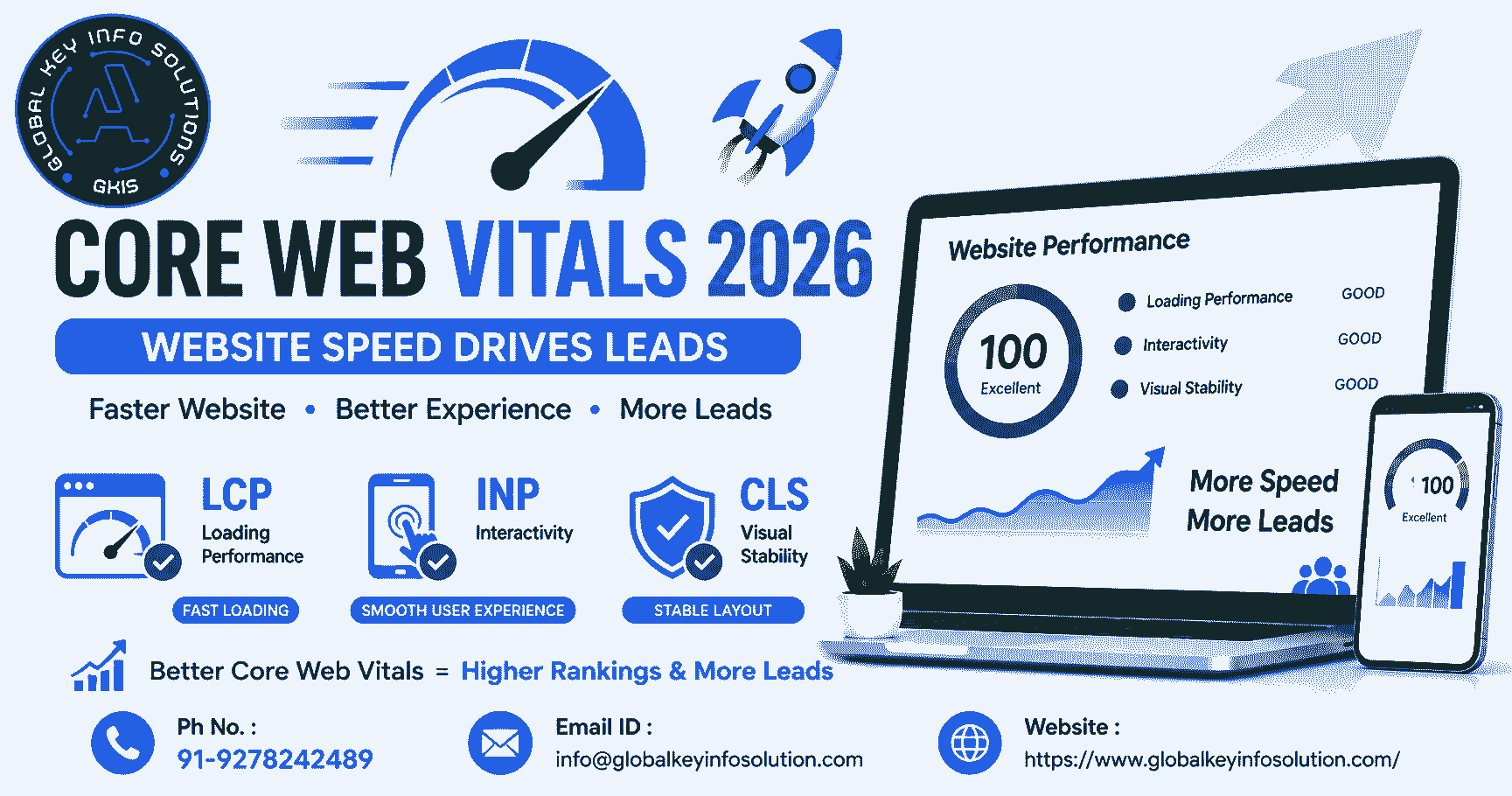
Therefore, a responsive site isn't just more beneficial for users, but also for search engines. It directly affects whether you appear on Google at all. Speed plays into this too, since Google scores your real-world mobile performance through Core Web Vitals. This is exactly why responsive web design services have become essential for every business, whatever backend you choose.
The cost of getting this wrong is real. Every single person who visits an awkward, difficult-to-tap mobile interface is an opportunity that you have paid for to get and then lost in seconds. Change the layout, and you'll see the same traffic turning into leads, with no more dollars for marketing.
Static vs Dynamic vs Responsive: Side-by-Side Comparison
Here is how the three line up. Notice that responsive sits in its own column, because it applies to both static and dynamic sites rather than competing with them.
| Feature | Static | Dynamic | Responsive |
| What it controls | Backend delivery | Backend generation | Frontend layout |
| Content | Fixed, same for all | Changes by user or data | Adapts to the device |
| Best for | Simple, brochure sites | Stores, blogs, portals | Every website |
| Loading speed | Very fast | Slower to process | Depends on backend |
| Updates | Manual, by developer | Self-service via CMS | Not applicable |
| Cost in India | Lower | Higher | Usually included |
| A separate choice? | Yes, vs dynamic | Yes, vs static | No, sits on top of both |
Which Website Type Does Your Business Need?
Forget the jargon and answer these questions honestly.
- Do you need to sell products, take bookings, or let users log in? If yes, go dynamic.
- Do you add fresh content like blogs or offers every week? If yes, lean dynamic.
- Do you mostly need a professional presence with a few pages that rarely change? If yes, static is enough.
- Is your budget tight and your needs simple? Static gives you more value per rupee.
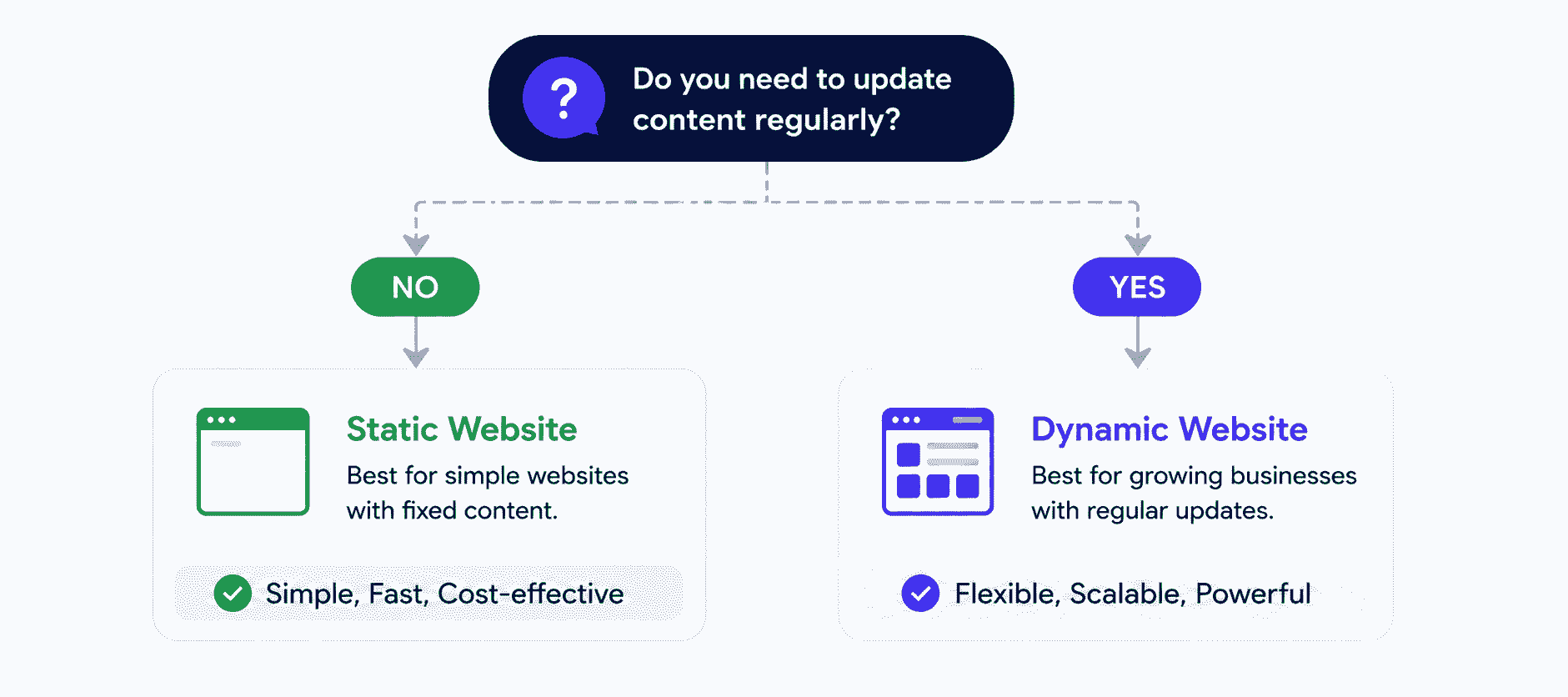 If your answers are mixed, there is a middle path. A hybrid configuration keeps the majority of your website in a static, fast mode, and the dynamic features are added only in the areas you require them, such as a blog or store section. It's worth talking to your web team members about. Be open about where you see your business moving, not only the current position, as the best decision will depend on your next two years, not just this month. Whatever you decide to do, responsive design, it isn't an option. Build either type to work on mobile from day one.
What Each Type Costs in India in 2026
Cost is usually the deciding factor, so here are realistic 2026 figures for the Indian market.
| Website type | Typical cost in India (2026) | Best for |
| Static website | ₹8,000 – ₹30,000 | Simple presence, portfolios, brochures |
| Dynamic CMS website | ₹30,000 – ₹90,000 | Blogs, lead generation, growing businesses |
| E-commerce (dynamic) | ₹50,000 – ₹3,00,000 | Online stores |
| Responsive design | Usually included | Every site above |
Remember that responsive design is part of any professional build today, not a paid add-on. If an agency quotes responsiveness as a separate line item, ask why. Also budget for the small recurring costs that apply to every type, like domain renewal and hosting, plus 18% GST on the development price.
Within each band, a few things move the price. More pages, a custom design instead of a template, instead of a template, content writing, and real photography all push the price up. A static template site is in the middle of the range, while the one that is custom-designed with original content is at the top. The same principle applies to dynamic websites, in which the addition of booking systems, payment gateways, and third-party integrations adds to the cost of the final product.
Can I Upgrade From Static to Dynamic Later?
Yes, but it's not a simple modification. The transition between static and dynamic generally involves reworking the website rather than just switching to new features, since both are constructed differently from scratch. This is why it's important to be prepared. If you know you will need an online store or user accounts within a year, it is often cheaper to build dynamic from the start than to pay for two projects. If your needs are genuinely simple and likely to stay that way, a static site keeps your costs low with no regret.
Not Sure Which Website Your Business Needs?
Get expert advice and a clear quote for a fast, responsive website built around your goals.
Get a Free Consultation →Conclusion
The decision between a static, dynamic, and responsive website is a lot easier when you realize that they're not the same option. Choose if your business requires an easy static backend or a dynamic one, then make sure the site is responsive no matter what. In a mobile-first economy like India, responsive design is the one thing you can never leave out. It is what keeps your visitors happy and your rankings strong, and it works on top of either backend you pick.
If you want help choosing the right type and building it the right way, Global Key Info Solutions designs fast, responsive websites for businesses across India, with honest advice on what you actually need and clear pricing from the start.

6a607a66b46d7.png)






0 Comments
Leave a comment