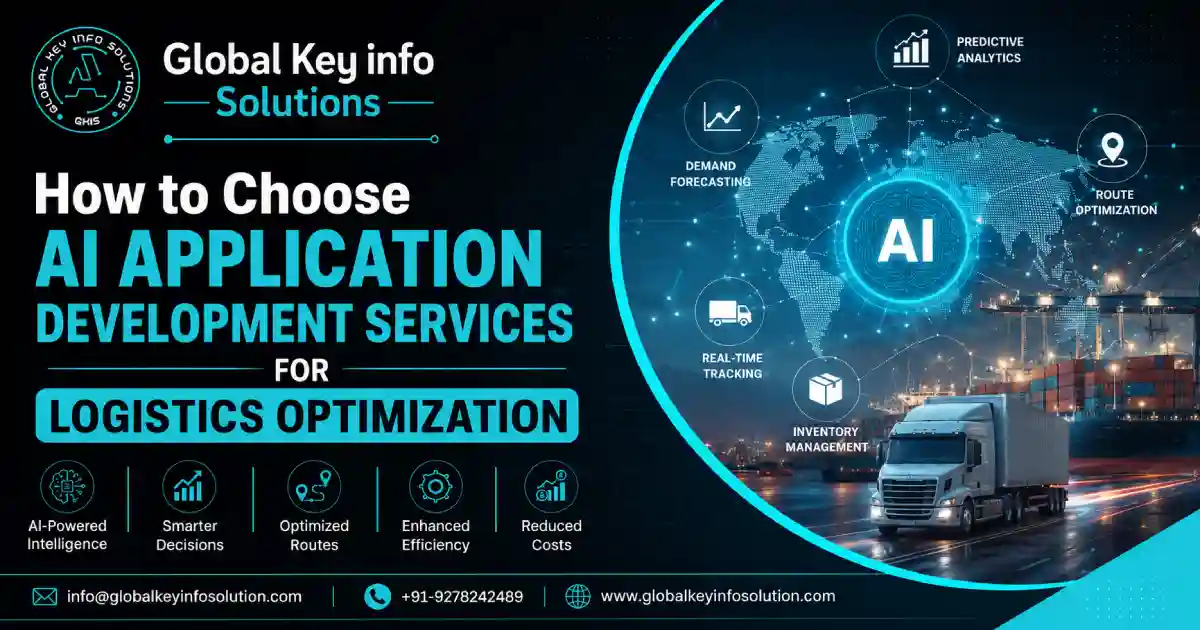
The modern logistics and supply chain landscape is facing a massive shift. Relying on legacy systems, manual tracking, and static route planning is a quick way to lose market share. Today, businesses face volatile fuel markets, shifting cross-border tariffs, and rising customer demands for instant tracking and rapid delivery.
Data confirms this shift. According to an industry study by Accenture, companies with AI-mature supply chains are 23% more profitable than their peers. Furthermore, research highlights that AI-enabled distribution networks regularly achieve a 5% to 20% reduction in overall logistics costs alongside a 20% to 30% drop in excess inventory.
| The Revenue and Efficiency Imperative | |
|---|---|
| Metric | Impact of AI Integration |
| Corporate Profitability | +23% higher margin over non-AI peers |
| Distribution Costs | 5% to 20% total cost reduction |
| Excess Inventory Assets | 20% to 30% reduction in tied-up capital |
| Fleet Utilization | Up to 20% increase in total capacity |
For startups, mid-sized e-commerce brands, and expanding enterprises, growing efficiently requires the right digital foundations. But building custom intelligence into your workflows is rarely an in-house job.
The real challenge isn't realising you need machine learning—it is finding the right tech partner. This guide explores exactly how to evaluate and select premium AI application development services tailored to your logistics needs.
1. Pinpoint Your Logistics Bottlenecks First
Before you start reaching out to external vendors, you need to understand exactly where your operations are losing money. Avoid investing in technology just for the sake of buzzwords. Instead, focus on targeted, high-ROI problems.
Dynamic Route Optimisation & Last-Mile Delivery
Are empty miles, inefficient dispatch schedules, and late delivery fees eating into your margins? Advanced AI Software Development can replace fixed routes with dynamic engines. These platforms process real-time variables—like traffic shifts, weather patterns, port delays, and delivery windows—to maximise fleet utilisation, reduce fuel consumption, and protect your delivery SLAs.
Predictive Maintenance for Fleet Management
Unexpected truck breakdowns slow down operations and cost money. By connecting IoT sensors with targeted AI Mobile App Development, your dispatchers can receive real-time alerts tracking engine temperature, tyre wear, and battery health. This allows your team to handle repairs proactively before a truck breaks down on the highway.
Demand Sensing & Automated Inventory Balance
Overstocking ties up valuable working capital, while stockouts lead to cancelled orders and unhappy customers. Machine learning algorithms analyse historical sales, regional trends, and external market signals to keep your inventory perfectly balanced. Within the warehouse, AI-driven picking routines help boost labour productivity by eliminating wasted movement.
2. Technical Capabilities of Top AI Partners
Logistics networks run around the clock. A generic software house without specific industrial experience will struggle to build the robust systems you need. Look for development agencies that show deep hands-on expertise across these core pillars:
Production-Grade AI Software Development & Data Pipelines
Your partner must know how to build clean, production-ready code. They should be highly skilled at setting up stable data ingestion loops that feed clean information to your algorithms, training customised predictive models, and deploying computer vision tools for automated parcel scanning or damage assessment.
Strategic AI Consulting Services
Building software without a clear operational plan can quickly drain your budget. Top-tier development firms always provide upfront AI Consulting Services. They will audit your current tech stack, validate your data quality, run proof-of-concept (POC) tests, and lay out clear ROI targets before writing any code.
Next-Gen Generative AI Development & Agentic Automation
The technology landscape has moved past simple chat interfaces. Leading agencies now focus on Generative AI Development to build production-ready agentic workflows:
Autonomous AI Agents: Systems that monitor supply chain disruptions and automatically arrange replacement shipping capacity.
Natural Language Operations: Voice and text interfaces that let warehouse managers query complex ERP systems using conversational English.
Intelligent Document Processing (IDP): Tools that instantly scan, verify, and log complex customs paperwork, bills of lading, and shipping manifests to minimise human data-entry errors.
Cross-Platform AI Mobile App Development
Logistics happens in the field, not just behind a desk. Your tech partner needs strong experience in AI Mobile App Development to deliver fast, responsive mobile apps for drivers, field technicians, and warehouse workers. These apps must feature clean user interfaces, sync smoothly with your central servers, and include offline modes for areas with poor cell service.
3. Step-by-Step Framework for Choosing Your Vendor
Use this practical checklist to evaluate and interview prospective development teams:
Step 1: Audit Their Integration with Legacy Tech Stacks
Your business likely relies on core infrastructure like SAP, Oracle, or specialised Warehouse Management Systems (WMS). A standalone AI app that cannot communicate with these systems creates data silos. Make sure your vendor can build reliable middleware and custom APIs that sync smoothly with your existing tools without disrupting daily operations.
Step 2: Review Technical Security & Data Compliance
Logistics databases contain sensitive information, including customer delivery details, proprietary supplier pricing, and high-value route schedules.
Confirm that the developer holds robust data security credentials such as SOC 2 Type II or ISO/IEC 27001.
Ask how they handle data encryption both at rest and during transit.
Review their strict compliance standards regarding how your proprietary training data is stored and isolated.
Step 3: Check for System Scalability and Marginal Costs
The software you build today should easily accommodate your future business growth. Ask prospective vendors about their technical design:
The Scaling Principle: A great indicator of solid software architecture is a low marginal cost for system expansion. Once an agency builds and fine-tunes a predictive model for one regional distribution hub, deploying that same system to five new locations should only require minor adjustments, not a complete budget reset.
4. Red Flags to Watch Out For
When evaluating proposals, be sure to watch out for these common warning signs:
Guaranteed, Instant ROI Claims: Fine-tuning machine learning models takes time. Any agency promising a 100% accurate system that fixes your supply chain in the first week should be treated with caution. Look for teams that set realistic milestones and scale your project in phases.
The "Black Box" Problem: If an agency cannot explain why their algorithm recommends specific changes—like altering an inventory level or rerouting a vehicle—your operational team will not trust the software. Insist on transparent, explainable AI workflows.
No Post-Launch Optimisation Plans: Algorithms can degrade over time when faced with changing real-world data patterns, a problem known as model drift. Avoid vendors who plan to hand over the code and leave without offering a long-term maintenance and optimisation agreement.
5. Conclusion: Future-Proofing Your Logistics
Choosing an AI development partner is a key business decision that can reshape your operational efficiency. By partnering with a team that combines deep technical expertise with a clear understanding of supply chain workflows, you can eliminate costly bottlenecks, maximise your resource utilisation, and build a highly resilient logistics network.
Start small. Identify one or two high-impact areas—such as dynamic route planning or automated inventory tracking—and deploy a focused proof of concept. Building a solid technical foundation today keeps your business agile and ready to scale.
6a60a6e873bfc.png)



0 Comments
Leave a comment