6a60a8728f283.png)
Artificial intelligence has fundamentally changed how businesses approach content creation. From generating blog drafts in minutes to auto-producing meta descriptions and schema markup, AI tools are now embedded in nearly every modern SEO workflow. But a critical question remains: does AI-created content actually help your on-page SEO — or does it quietly hurt it?
At Global Key Info Solutions (GKIS), we work with clients across industries to craft SEO strategies that deliver measurable results. Here is our honest, data-backed take.
Where AI Content Genuinely Adds Value
AI tools excel at the structural and technical layers of on-page SEO. They can rapidly generate optimised title tags, meta descriptions, heading hierarchies, and schema markup — tasks that are repetitive, time-consuming, and highly formulaic. When applied correctly, this speeds up production and reduces the risk of missing basic optimisation signals.
AI also supports keyword research by analysing search intent at scale, identifying topic clusters, and spotting content gaps that a human editor might overlook. Tools like Surfer SEO, Clearscope, and Semrush Copilot use AI to align content structure with what currently ranks — a genuine advantage when building out category pages or large informational hubs.
Where AI Content Falls Short
Google’s quality standards have grown considerably stricter. A Semrush study analysing over 42,000 blog posts found that human-written content is eight times more likely to rank in the number-one position compared to purely AI-generated pages. The reason is clear: Google’s algorithms, guided by its E-E-A-T framework (Experience, Expertise, Authoritativeness, Trustworthiness), reward content that reflects real-world knowledge and genuine perspective.
AI models, by their nature, remix what already exists. They cannot offer original research, personal experience, or the kind of nuanced opinion that builds topical authority. Websites that publish unedited, mass-produced AI content risk manual penalties, algorithmic deindexation, and — most critically — a loss of audience trust.
The Right Approach: Human-Led, AI-Assisted
The most effective strategy is a hybrid model. Use AI to accelerate your workflow — draft outlines, generate metadata, surface keyword opportunities, and check for structural gaps. Then bring in human editorial judgement to add depth, verify accuracy, infuse real expertise, and align the content with your brand voice.
This approach keeps production efficient without compromising the quality signals Google actively measures: session duration, engagement rate, and citation worthiness in AI-generated search overviews.
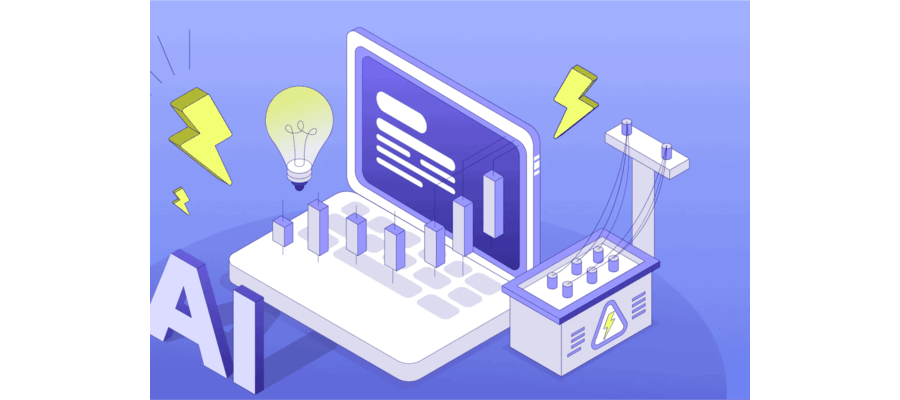
KEY TAKE AWAYS FOR YOUR SEO STRATEGY
- Use AI to automate metadata, schema markup, and content outlining — it saves significant time.
- Always apply human review and add expert insight before publishing any AI-drafted content.
- Avoid publishing bulk AI content without editorial oversight — Google’s helpful content system will penalise it.
- Align every piece of content with genuine user intent, not just keyword density.
- Measure content quality through engagement metrics, not just rankings.
Conclusion
AI-created content is a powerful tool when used strategically — but it is not a shortcut to SEO success. For on-page SEO, it performs best as a productivity layer that supports, rather than replaces, human expertise. At GKIS, we help businesses strike that balance: leveraging AI efficiency while building the kind of authoritative, people-first content that earns lasting visibility in search.






1 Comment
Naveen
good insights
Leave a comment