
The barrier to entry in e-commerce has never been lower, but the barrier to profitability has never been higher. Anyone can use a wizard to launch a basic storefront in an afternoon. Yet, many businesses find themselves wondering why their traffic refuses to convert, why their page speeds lag on mobile devices, or why their backend systems refuse to talk to one another.
The reality of modern digital retail is that out-of-the-box configurations create average storefronts. Average storefronts do not survive the cutthroat competition of modern digital algorithms and shifting consumer attention spans.
To scale past early milestones, businesses require specialised engineering. Whether you are an agile startup or an established enterprise, working alongside a dedicated Professional Shopify Expert transitions your digital asset from a basic catalogue into a high-octane conversion engine.
The True Cost of Technical Debt in Modern Retail
Many brands treat web development as a one-time expense rather than a continuous revenue driver. They string together a fragile web of conflicting plug-ins, unoptimized imagery, and heavy script tracking files. The result? A fragmented user interface that frustrates users and drives up cart abandonment rates.
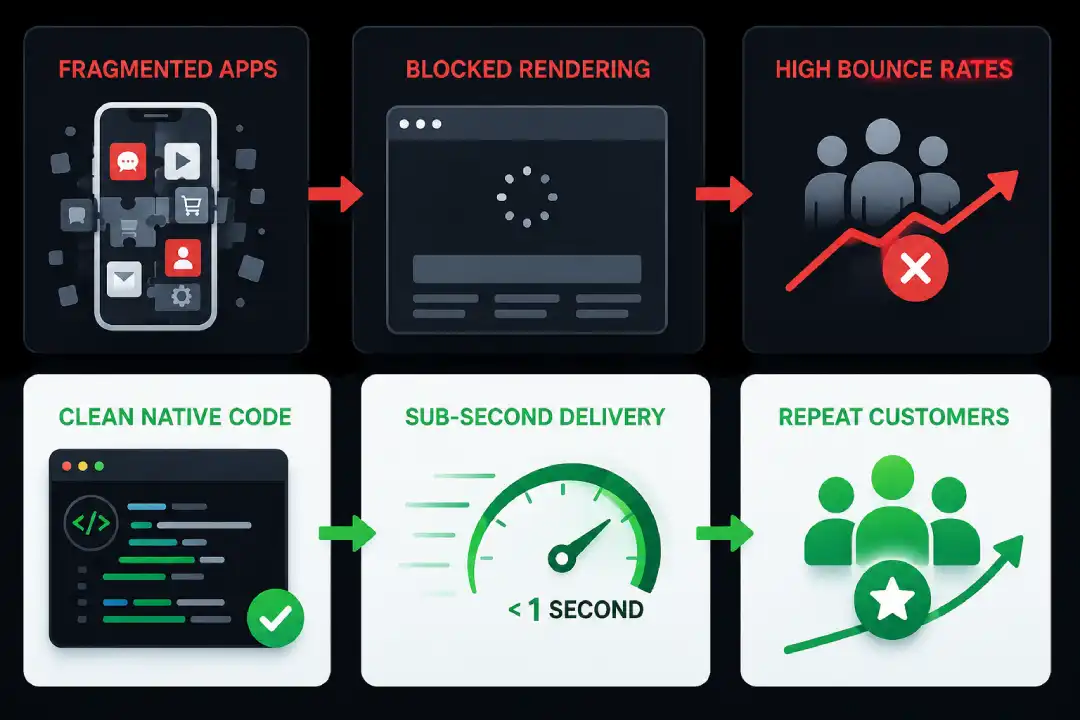
When you collaborate with a dedicated Shopify Development Company, you are paying for the elimination of this technical debt. Experts write clean, minimalist code, utilising native framework capabilities rather than relying on heavy external software applications. This approach safeguards your store's mobile health metrics and structures your data perfectly for modern search engine crawlers.
1. Cataloguing Your Needs: Decoupling Design from Infrastructure
Before looking for a partner, map out your operational bottlenecks. Software development requires precise instructions. General requests yield unpredictable timelines and budgets.
Visual Architecture vs. Systems Engineering
- Front-End Identity: If your brand strategy requires highly specific storytelling layouts, interactive product modules, or a bespoke look, you need an agency specialising in Custom Shopify e-commerce web design service. Their job is to map consumer psychology into visual interfaces.
- Systems Integration: If your daily friction points involve automated inventory syncing across multiple physical warehouses, custom enterprise resource planning (ERP) handshakes, or advanced membership models, you require technical specialists who understand data pipelines and Shopify Web Development Solutions.
Anticipating the Shift: Headless Ecosystems and AI Discovery
Modern search behaviour is moving beyond traditional text inputs. Customers are finding products through natural language search engines, generative engines, and social video platforms. Leading agencies build optimised data feeds and headless architectures that push your products cleanly into these discovery networks, ensuring your business stays ahead of emerging shifts in consumer behaviour.
2. Agency Teams vs. Individual Contractors: Finding Your Fit
The choice between a specialised firm and an individual contractor depends entirely on the size of your operation and the complexity of your workflow.
|
Operational Factor |
Solo Freelance Contractor |
Trusted Shopify Website Development Company |
|
Ideal Project Scale |
Isolated design updates, CSS tweaks, and minor bug isolation. |
Complete platform overhauls, custom app building, full migrations. |
|
Execution Breadth |
Singular focus; usually specialises in either design or code. |
Multidisciplinary; contains dedicated UI designers, QA testers, and SEOs. |
|
Project Risk Profile |
Higher vulnerability to personal emergencies or sudden ghosting. |
Protected by corporate contracts, backup developers, and account managers. |
|
Typical Investment |
$20–$60 per hour |
$50–$175+ per hour (varies by geography and team scale) |
For early-stage setups testing product-market fit, a nimble freelancer can quickly clear out basic design snags. However, if your brand handles significant daily volume and relies on integrated marketing channels, partnering with an established leading Shopify E-commerce Development firm provides the security and multi-layered eyes your operations demand.
3. Financial Realities: Navigating Global Development Rates
Navigating development fees requires an understanding of regional economic markets. High quality exists globally, but price points shift dramatically based on overhead and geography.
Geographic Market Dynamics
- Tier 1 Markets (US, UK, Western Europe): Hourly talent ranges from $80 to $250+. This model suits large-scale enterprises that require local oversight, in-person discovery sprints, and high-touch corporate consulting.
- Tier 2 Markets (India, Eastern Europe): Hourly rates run from $30 to $95+. Choosing a reputable Shopify Development Company in India allows growing brands to secure identical technical outputs, deep platform mastery, and rigorous engineering logic while optimising capital allocation.
Standardised Budgeting Realities
- Theme Adaptation ($1,500 – $4,500): Customising premium templates, aligning font hierarchies, integrating base payment architecture, and setting up core inventory structures.
- Custom Visual & Logic Builds ($5,500 – $25,000): Bespoke theme creation from scratch, custom localised checkout logic, deep data migrations from old platforms, and customised layout engines.
- Enterprise Ecosystems ($25,000 – $120,000+): Global headless setups, international multisite management, proprietary application development, and live ERP data-streaming hooks.
4. The Vetting Blueprint: Filtering Professionals from Amateurs
Protect your capital by bypassing surface-level sales pitches. Implement an intentional, objective screening protocol to identify true experts. If you want to search for verified agencies manually, the best place to start is the official Shopify Partner Directory, where you can filter teams by their proven track record.
Check Active Form Factors, Not Just Mockups
Static imagery in a design portfolio tells you nothing about performance. Request direct links to live, functioning stores. Launch these stores on mid-tier mobile hardware over a cellular network. Watch how layout shifts behave, test search responsiveness, and check if UI elements overlap during rapid scrolling.
Ask Structural, Structural Questions
When evaluating a development partner, skip generic inquiries and push for technical specifics:
- How do you approach JavaScript execution loops to keep our interactive product pages from freezing mobile browsers?
- Can you outline your specific fallback and recovery protocols if our primary ERP webhook fails during a flash sale?
- What is your strategy for preserving legacy metadata and database relationships during an active platform migration?
Audit Their Quality Assurance Infrastructure
Inquire about how code is validated. Professional operations utilise version control systems (like GitHub or GitLab) and deploy code to isolated staging servers before pushing changes live. If a team develops directly inside a live theme file without a safety net, walk away immediately.
5. Risk-Free Onboarding: The Execution Framework
Once you select your development partner, build an operational framework that protects your data, timeline, and asset value.
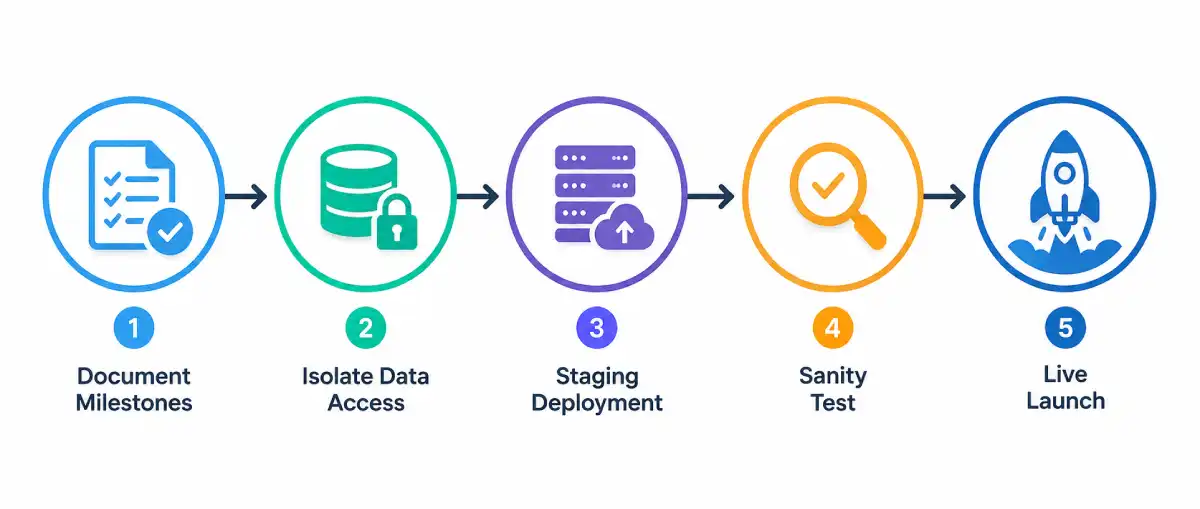
Phase 1: Micro-Deliverables and Clear Definitions
Avoid long, vague project timelines. Break your project down into distinct, measurable weekly sprints with clear verification milestones. This allows you to evaluate code quality and communication velocity early in the process, rather than discovering major issues right before your scheduled launch date.
Phase 2: Restrictive Credentialing
Never hand over your account's primary master administrator password. Protect your customer database and financial records by setting up secure collaborator accounts. You can follow the Shopify Collaborator Access Guide to learn how to grant precise, granular permissions tailored exactly to what your development team requires, keeping sensitive operational data completely secure.
Phase 3: Comprehensive Sandbox Evaluation
Before rolling out new infrastructure to your customers, run complete simulated transactions in a closed staging sandbox. Verify that tracking scripts fire in the correct sequence, check that promotional codes calculate accurately against custom shipping rules, and ensure that order notifications render perfectly across all email clients.
Conclusion: Securing Your Digital Real Estate
A high-converting storefront is not a stroke of luck; it is a product of deliberate engineering. Partnering with a Professional Shopify Expert allows you to trade technical frustration for predictable, scalable growth. By taking the time to define your scope, vet your partners thoroughly, and establish clear technical standards, you turn your online store into a resilient, high-converting digital asset built for long-term profitability.





0 Comments
Leave a comment